
Free Kaal Sarp Dosh Calculator
Wondering why progress feels delayed despite your hard work? Discover whether Rahu and Ketu form Kaal Sarp Dosh in your birth chart with our free online calculator.
Calculate your Kaal Sarp Dosh Chart
DOWNLOAD THE APP NOW!
Connect With An Astrologer On Our App For More Personalised Detailed Predictions And Remedies
 Download Now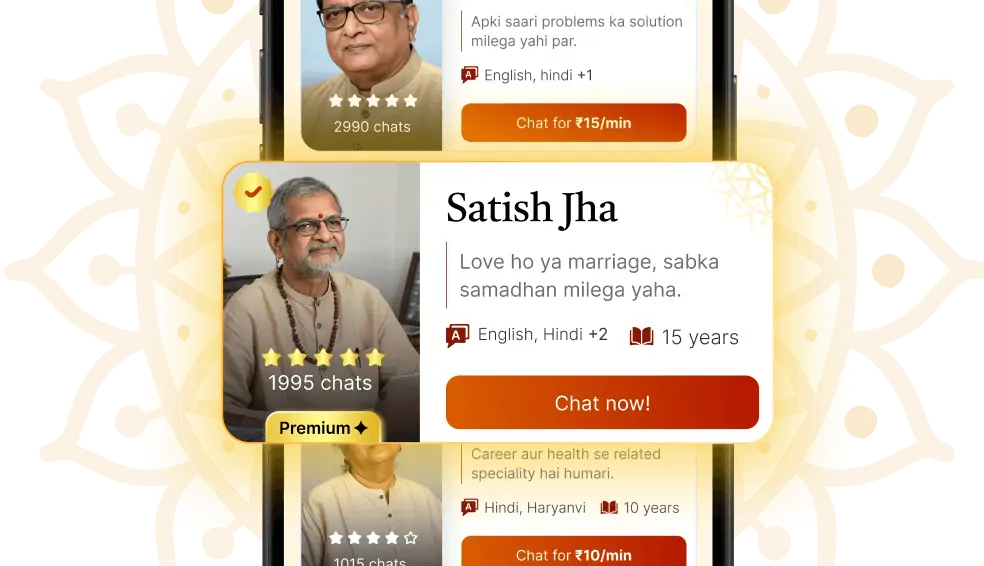
What is the Kaal Sarp Dosh Calculator?
A Kaal Sarp Dosh Calculator is an online astrology tool that helps identify whether this planetary combination is present in your birth chart. It analyses the positions of Rahu, Ketu, and other planets based on your exact birth details.
By using your date of birth, time of birth, and place of birth, the calculator examines your Kundli to determine whether all major planets fall between Rahu and Ketu. This alignment is traditionally associated with the formation of the dosh in Vedic astrology.
The online tool makes it easier to understand your planetary positions without manually analysing a birth chart and offers insights into the significance of kal sarp dosh in your Kundli.
Kaal Sarp Dosh Meaning
The word Kaal refers to time, while Sarp means serpent. In Vedic astrology, Kaal Sarp Dosh is associated with a specific planetary alignment involving Rahu and Ketu in a person’s birth chart. It is traditionally believed to form when all seven major planets are positioned between Rahu and Ketu.
Rahu and Ketu are often associated with karmic patterns, transformation, and important life lessons. Some astrological interpretations suggest that the dosh may bring periods of delays, challenges, or uncertainty in different areas of life. However, its influence can vary depending on the overall planetary positions and strength of the Kundli.
Kaal Sarp yog is not always viewed only as a negative planetary combination. Many astrologers consider it a transformative influence that can encourage self-discipline, resilience, introspection, and spiritual growth. The actual impact of this dosha depends on the complete birth chart, including the placement and influence of other planets. Understanding your Kundli can therefore help you gain deeper insights into the presence and significance of this planetary combination.
Kaal Sarp Dosh Types
There are 12 traditionally recognised types of Kaal Sarp Dosh, based on the placement of Rahu and Ketu in different houses of the birth chart. Each type is associated with different areas of life and is interpreted according to the overall planetary configuration in the Kundli. Here are the 12 commonly mentioned types:
1. Anant Kaal Sarp Dosh
Anant Kaal Sarp Dosh is formed when Rahu is placed in the 1st house and Ketu in the 7th house. It is traditionally associated with self-identity, relationships, marriage, and emotional balance. This placement may encourage greater self-awareness and patience while balancing personal goals with partnerships.
2. Kulik Kaal Sarp Dosh
Kulik Kal Sarp Dosh occurs when Rahu is in the 2nd house and Ketu is in the 8th house. It is associated with family, speech, finances, shared resources, and transformation. Its interpretation may highlight the importance of financial awareness, communication, and stability in family matters.
3. Vasuki Kaal Sarp Dosh
Vasuki Kala Sarp Dosh forms when Rahu occupies the 3rd house and Ketu occupies the 9th house. This configuration is traditionally linked with courage, communication, siblings, personal efforts, beliefs, and fortune. It may emphasise perseverance, confidence, and developing an independent outlook.
4. Shankhpal Kaal Sarp Dosh
Shankhpal Sarp Dosh occurs when Rahu is placed in the 4th house and Ketu in the 10th house. It is associated with home, family, emotional security, career, and responsibilities. This placement may bring greater focus to maintaining balance between personal comfort and professional ambitions.
5. Padma Kaal Sarp Dosh
Padma Kaal Sarp Dosh forms when Rahu occupies the 5th house and Ketu the 11th house. It is traditionally associated with creativity, education, intelligence, relationships, aspirations, friendships, and gains. The overall Kundli is important when interpreting how this configuration may influence these areas.
6. Mahapadma Kaal Sarp Dosh
Mahapadma Kaal Sarp Dosh occurs when Rahu is placed in the 6th house and Ketu in the 12th house. This configuration is associated with areas such as service, competition, daily routines, expenses, solitude, and spirituality. It may encourage discipline, practical thinking, and greater awareness of personal habits.
7. Takshak Kaal Sarp Dosh
Takshak Kaal Sarp Dosh is formed when Rahu occupies the 7th house and Ketu the 1st house. It is traditionally associated with partnerships, marriage, public interactions, and self-identity. This placement may bring attention to the balance between individual needs and expectations within relationships.
8. Karkotak Kaal Sarp Dosh
Karkotak Kaal Sarp Dosh occurs when Rahu is placed in the 8th house and Ketu in the 2nd house. It is associated with transformation, shared resources, family, speech, and financial security. From a traditional astrological perspective, this configuration may encourage deeper self-reflection and awareness of personal values.
9. Shankachood Kaal Sarp Dosh
Shankachood Dosh forms when Rahu occupies the 9th house and Ketu the 3rd house. This placement is traditionally linked with higher learning, beliefs, fortune, travel, communication, courage, and personal efforts. It may encourage a person to develop their own beliefs while continuing to learn through experience.
10. Ghatak Kaal Sarp Dosh
Ghatak Sarp Dosh occurs when Rahu is placed in the 10th house and Ketu in the 4th house. It is associated with career, reputation, responsibilities, home, family, and emotional security. This configuration may highlight the need to find balance between professional ambitions and personal well-being.
11. Vishdhar Kaal Sarp Dosh
Vishdhar Kaal Sarp Dosh forms when Rahu occupies the 11th house and Ketu the 5th house. It is traditionally associated with gains, friendships, social networks, aspirations, creativity, education, and personal expression. Its influence is interpreted differently depending on the strength and placement of other planets in the birth chart.
12. Sheshnag Kaal Sarp Dosh
Sheshnag Dosh occurs when Rahu is placed in the 12th house and Ketu in the 6th house. This configuration is associated with expenses, solitude, spirituality, service, competition, and daily routines. It may encourage introspection, discipline, and greater awareness of how one manages time and resources.
How to Know Your Kaal Sarp Dosh Type
The presence and type of Kaal Sarp Dosh can be determined by examining the positions of Rahu and Ketu along with the other planets in your birth chart. Since the interpretation depends on the complete Kundli, simply having this planetary alignment does not determine the outcome of your life.
Use the calculator to check your birth chart and find out whether this combination is present in your Kundli and which type it corresponds to.
Get Your Free Kal Sarp Dosh Analysis Now
Effects Of Kaal Sarp Dosh
According to traditional Vedic astrology, Kaal Sarp Dosh may be associated with certain challenges and recurring themes in life. However, its influence is not the same for everyone. The placement of Rahu and Ketu, the strength of other planets, and the overall birth chart play an important role in determining its significance.
Some commonly discussed effects include:
- Delays and obstacles: Some astrologers associate this combination with delays in achieving goals or having to make repeated efforts before seeing progress.
- Career challenges: A person may experience periods of uncertainty, changes in professional direction, or a feeling that career progress is slower than expected.
- Emotional fluctuations: Traditional interpretations may link this placement with periods of overthinking, restlessness, or difficulty maintaining emotional balance.
- Relationship concerns: Depending on the houses involved, it may bring greater focus to communication, trust, partnership, and maintaining harmony in relationships.
- Financial uncertainty: Certain configurations are traditionally associated with fluctuations or the need for greater discipline in managing finances and resources.
- Increased introspection: Kaal Sarp Dosh is not considered negative in every interpretation. Some astrologers view it as an influence that can encourage self-reflection, resilience, discipline, and spiritual exploration.
- Desire for transformation: The Rahu-Ketu axis is associated with change and karmic themes, and this combination may encourage a person to reassess priorities and develop greater self-awareness.
General Remedies of Kaal Sarp Dosh
According to traditional Vedic astrology, certain spiritual practices and remedies are recommended to seek balance and reduce the challenges associated with Kaal Sarp Dosh. These remedies mainly involve Lord Shiva worship, mantra chanting, charity, and regular spiritual practices.
- Worship Lord Shiva: Chant Shiva mantras such as “Om Namah Shivaya” as part of your regular spiritual practice. Some traditions also recommend chanting the Gayatri Mantra.
- Perform Rudrabhishek: Rudrabhishek and Shiva Puja are traditionally considered important remedies. These practices can be performed on auspicious occasions such as Maha Shivratri, Shravan Somvar, and Sawan Shivratri.
- Offer Water to the Shivling: Visiting a Shiva temple and offering water to the Shivling is a commonly followed spiritual practice. It can be included as part of a regular worship routine.
- Offer Bel Patra and Flowers: During Shiva worship, devotees traditionally offer Bel Patra, flowers, fruits, and other appropriate offerings to the Shivling as part of their puja.
- Chant the Maha Mrityunjaya Mantra: Regular recitation of the Maha Mrityunjaya Mantra is traditionally recommended by some astrologers as a spiritual remedy associated with the dosh.
- Practise Charity and Seva: Donating food or helping those in need is considered a meaningful spiritual practice. Feeding animals, including offering suitable food to stray dogs, is also followed as a remedy in some traditions.
- Consider Kaal Sarp Dosh Puja: Those seeking a traditional remedial ritual may consider performing a puja under the guidance of a knowledgeable priest or astrologer. Certain pilgrimage centres, including Ujjain and Trimbakeshwar, are traditionally associated with such rituals.
Astrology Calculators

Love Meter
Check your love compatibility instantly with this free astrology calculator. Enter your and your partner's names and find out how aligned your personalities and emotions are.
Love Meter ›
Flames Game
Discover what your relationship with your loved ones could mean. Is it a Friendship, Love, Affection, Marriage, or Enemy? Find the accurate result with this fun FLAMES calculator.
Flames Game ›
Angel Number
Find out the numbers that bring you success and balance in life. This astrology numerology calculator gives instant, accurate results.
Angel Number ›
Birth Chart/Natal Chart Calculator
Measure the romantic compatibility between you and your special someone. See how your names and vibes align in the matters of the heart.
Birth Chart/Natal Chart Calculator ›
Life Age Checker
Find your exact age in years, months, and days in few taps. This free astrology calculator helps track milestones based on your birth date.
Life Age Checker ›
Numerology Calculator
Decode your life path number and destiny traits with the numerology calculator. See what your birth date reveals about your strengths and future.
Numerology Calculator ›FAQs - Kala Sarpa Dosha Calculator
How can I check if I have Kal Sarp dosh?

How can the kaal sarp dosh calculator help me?

Is the calculator for kaal sarp dosh accurate?
How does a Kaal Sarp Dosh calculator work?
How to use the Kala sarp dosha calculator by date of birth?
Can I check my Kaal Sarp Dosh without knowing my birth time?
Can I reduce the effect of kaal sarp dosha?
Is Kaal Sarp Dosh always negative?